This is a question that often comes up when families discover our school:
“ “You’re an alternative school, but you follow a curriculum and teach academic subjects…
How does that work?”
To fully understand our answer to this question, it is essential to begin by defining what is meant by alternative school.
What is an alternative school?
The term ‘alternative school’ actually encompasses a wide range of very different approaches.
Among the best known are, for example:
- Montessori schools,
- democratic schools,
- forest schools or outdoor schools,
- or independent schools based on active learning approaches.
Each model has its own philosophy, structure and priorities.
There is therefore no single alternative school, but a multitude of possible forms.
Our approach: a structured framework, focused on the child’s needs
At our school, we have chosen to position ourselves as an alternative school, not in the sense of ‘à la carte’ learning , as is the case in some democratic schools where pupils choose their own timetables and learning pathways, but as a different kind of learning environment, one that is both structured and deeply human.
So we decided to go for:
- a fixed timetable,
- the French curriculum, to ensure that all academic content is covered before pupils start secondary school.
Why this choice?
Quite simply because, in today’s world, qualifications and educational backgrounds remain essential stepping stones.
Even if one might question their limitations, they remain, today, the keys to access:
- at secondary school,
- to pursue a course of study,
- and later on, to working life.
Our aim is therefore clear: to open doors for pupils, not to close them.
To this end, we believe it is essential that they have a shared academic foundation that is solid, recognised and transferable, particularly when they move on to a more traditional secondary school.
A local reality that needs to be taken into account
In Mauritius, there is currently no alternative secondary education provision to ensure a natural progression from alternative primary schools.
We must therefore prepare our pupils to join French-speaking or English-speaking secondary schools, which operate in a more traditional manner.
This context reinforces our decision to provide a structured and reassuring environment, whilst remaining true to our educational values.
A French curriculum… offering flexibility and respecting the child’s pace
Following the French curriculum does not mean putting constant pressure on pupils.
We base our argument on a fundamental point: the French curriculum is a spiral curriculum.
Cela signifie que les notions sont :
- reviews,
- in-depth,
- consolidated
year on year.
This structure enables us to:
- to respect each child’s pace,
- to consolidate learning where necessary,
- to differentiate the work within the class group,
without imposing a strict requirement to ‘validate everything’ at the end of each school year.
A different approach to learning: moving, experimenting, creating.
Although academic skills are certainly present, they are not always taught in the traditional way.
We regularly offer:
- projects,
- fun workshops,
- artistic and physical activities,
- outings and hands-on experiences.
For example :
- Theatre helps to develop oral expression, self-confidence and the ability to speak in front of a group,
- Group projects foster cooperation, critical thinking and independence.
These activities fully meet the learning outcomes set out in the French curriculum, but through different approaches, which are often more engaging and meaningful for pupils.
At the heart of our project: supporting the whole child
Beyond knowledge and practical skills, our school places great emphasis on personal development.
We support every child in:
- self-awareness,
- managing and expressing emotions,
- learning about consent,
- respect for oneself and others,
- listening,
- expressing needs and boundaries in a caring manner.
This work is carried out:
- in everyday life,
- in group life,
- thanks to a small team that enables personalised support,
- in an atmosphere of trust and emotional security.
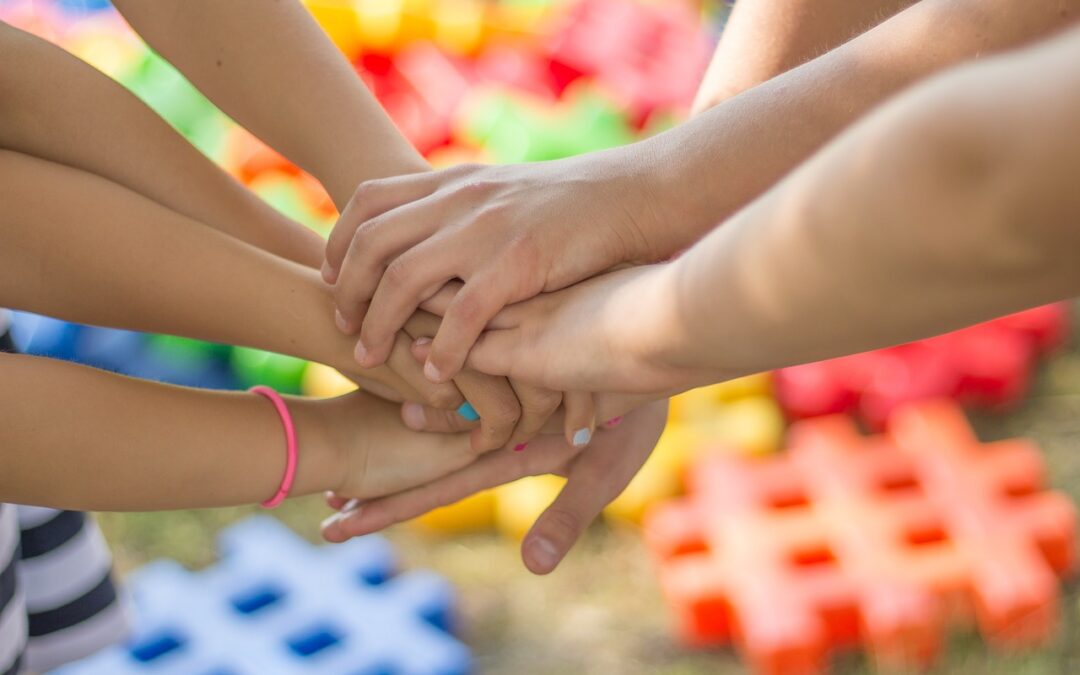
We aim to create a real little community, almost like a family, where every child feels valued, listened to and respected.
Educating the pupils… and the adults of tomorrow
Our aim is twofold: to prepare pupils to make a smooth transition to a mainstream secondary school,
but also to give them a solid foundation to navigate today’s society.
Learning to learn, yes.
But also learning to live together, to get to know one another, to respect others, to cooperate and to assert oneself in a fair manner.
In conclusion
There are many different types of alternative schools.
The key is to:
- to understand what each institution means by this term,
- and to choose a school whose educational philosophy is in line with the family’s values.
This is what we at Jeanne Barret School mean by the term ‘alternative school’.
A supportive environment, a solid educational foundation, a caring approach to teaching, and constant attention to the child in every aspect of their development.
‘Children are the future of humanity.’
Maria Montessori